



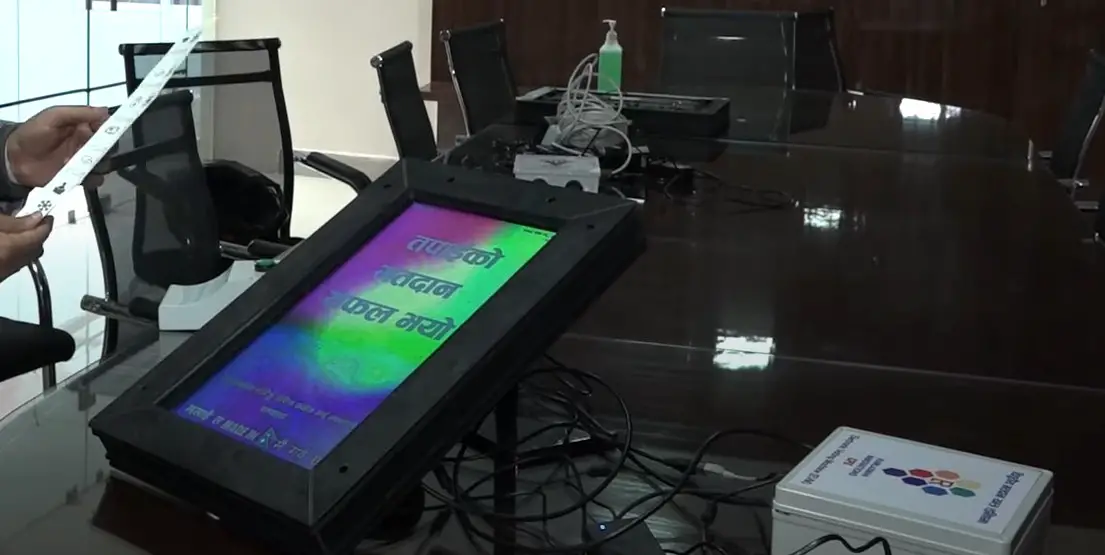
The CPN-UML [Communist Party of Nepal (Unified Marxist-Leninist)] is set to use Nepali-made electronic voting machines in its 11th national convention in Mangsir 2082. The party will employ 90 units of voting machines worth Rs 50 lakh (Rs 5 million). The adoption of voting machines (EVMs) in the party’s election offers a possibility of their use in future general elections too.
The CNP-UML is using voting machines developed by Ballot Solution Pvt. Ltd., operated by its parent company, Nepali company Ram-Laxman Group. The group has long pitched the idea of deploying EVM in Nepali elections. The government hasn’t mobilized the machines in general elections, but at least the digital voting practice has reached the CPM-UML headquarters. But it’s not the isolated case either.
In the 10th national convention in Mangsir 2078, too, EVMs were used. The party back then also spent Rs 50 lakh on the digital voting.
Electronic Voting Machines to decide CPN-UML Leadership
The National Convention of CPN-UML decides the selection of 15 office-bearers, including 251 members, for the party’s central committee. The party will use 80 voting machines and keep 10 as a backup. For electronic voting, each representative will take about 20 minutes. The grand event will have 2,400 representatives of the party.
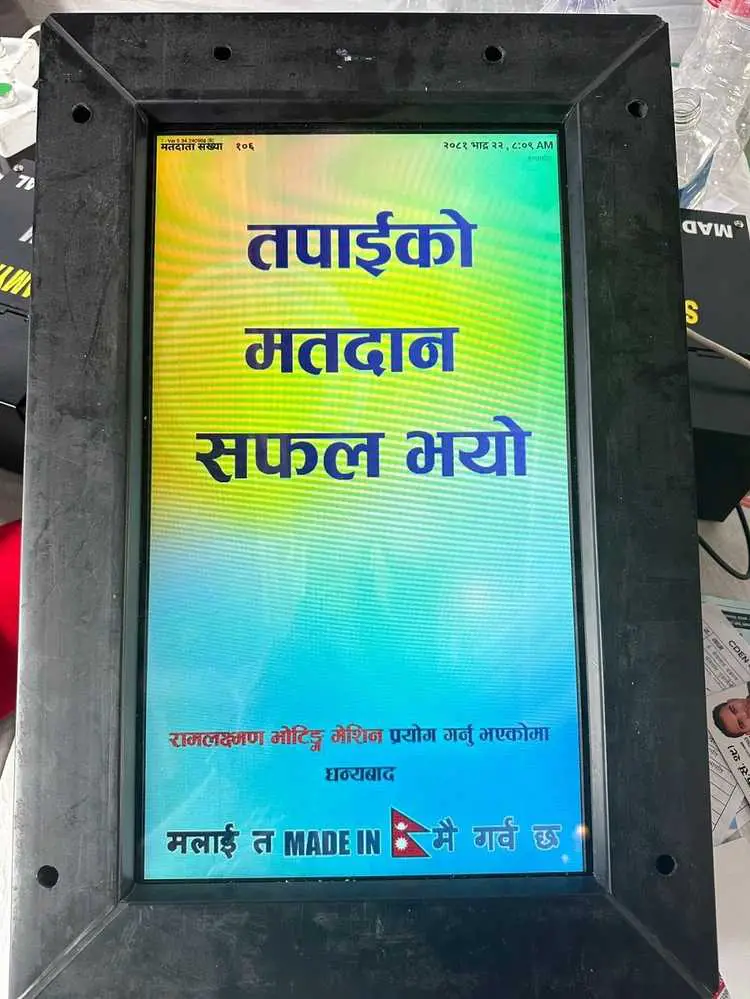
And to help the voting go smoothly, a trial has been arranged prior to the actual voting. According to Laxman Rimal, the chair of Ram-Laxman Innovation Pvt. Ltd., two EVMs were used for a test voting. UML Central Office Secretary Dr. Bhishma Adhikari informed that the delegates who came to the central office were taught how to vote using electronic voting machines by conducting a sample vote. “The delegates have been taught how to vote using electronic voting machines,” he said, adding, “Most of the delegates know how to vote on their own.”
Also: How to apply for National ID Card online in Nepal, Learn it here!
Future prospects for EVMs in national elections
The use of electronic voting machines adds more to the prospects of their deployment for general elections. Though these ideas have floated in the past, no outcome materialized. The House of Representatives election is scheduled for Falgun 21, 2082. The chances of digital voting are slim for this upcoming election, though. However, if more of these machines get used in party-level and other voting, the idea of their inclusion in the general election will gain more weight.
EVMs are expected to deliver transparent and fair election results, and digital voting could also allow Nepalese abroad to vote. So, the government could definitely work on ways to accommodate the maximum number of citizens’ participation in voting. That might happen in the next few years, let’s hope.