



In recent days, several mobile users in Nepal have shared screenshots of politically-motivated text messages they received on their numbers. After social media pages became too intense to handle, Nepal Telecom (NTC) issued a formal notice stating that it doesn’t provide any individual or organization user data. But the events have raised fresh concerns over the data safety of mobile subscribers.
VAS providers sending politically charged messages to mobile users
VAS (Value-Added Services) providers seem to be sending politically-motivated text messages. Is it not entirely declared unlawful to promote political individuals, or is it? But these messages are seeking cooperation and active participation for demonstration. It also includes data and a place to gather.
For obvious reasons, I have refrained from mentioning these details. Chances are that you may have already received one in your inbox. That helps for this article.
Also: VoWiFi in Nepal | WiFi Calling Details, Benefits, Ntc, Ncell
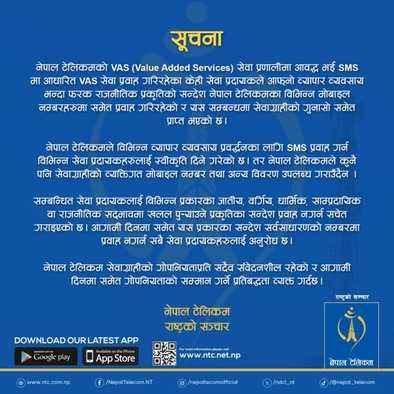
What has NT said?
In its statement, NT kind of admitted that VAS providers could be directly involved in sending messages to users. But it did maintain that it doesn’t endorse the idea of sending text messages to users for purposes other than business promotion. The state-run telco also assured that it doesn’t provide user contact or other personal details to anyone.
The company has also warned concerned parties not to engage in these activities any further.
Here’s the company’s notice:
The bigger picture
It’s the age of data. Those connected on social media or to some service submit their data, that are electronically stored on servers. That means users’ personal data is kept somewhere in data centers. But these data are subject to theft, infiltration, and even misuse. Integrity then becomes more important on the company’s part, while advanced security protocols are also imperative to ensure that user data remains safe and used for the said purpose.
In the current political message case, users have questioned how the sender got their personal numbers. It was unconsented for sure. Now, the question doesn’t have answers yet. We may get one later. The only relief here is that our numbers were used by senders to only send a text message.
The bigger picture, though? It’s also possible that they have access to our names, addresses, photos, and whatnot. We can’t rule out that this personal data can be manipulated, modified, and even sold. And people have a legitimate right to privacy and rightful use of their details in case.
Conclusion
This case of Ntc users receiving political messages on their numbers from unknown senders shouldn’t be taken lightly. It should rather be a call for stricter policy regarding user data protection and security, and tight monitoring of VAS providers. Government, telcos, VAS providers, users, and all stakeholders must come together to act on it.
As much as the digital lifestyle has become pervasive, so has the chance of data theft and misuse. We should all raise voice and act to eradicate the possibility of such incidents that can be harmful to our presence, mental peace, and identity.